Wednesday, June 22, 2016

Jane of All Trades

Jane of Lantern Hill
-L. M. Montgomery

Jane is an awkward eleven year old living with her mother and grandmother in a old house in the city of Toronto. Jane's pretty but spineless mother can't stand up to her grandmother and Jane's life is dull and restrictive. One day Jane has the shock of her life when she is told that her father is not dead, her parents are only separated and her father is living on Prince Edward Island. Shock follows shock and Jane is told she has to spend her summer with the father who abandoned her. 

I found it surprising how this book focused on divorce which was still a scandalous issue in the 1920's. Words that jump to mind with LMM's writing are usually homey, cosy, pleasant and not scandalous! This didn't put me off though and I mainly enjoyed the book except for one frustrating issue.

What aggravated me was how as soon as Jane landed on Prince Edward Island she suddenly became this domestic goddess and neighbourhood succor. In Toronto, Jane doesn't excel at anything but on P.E. Island Jane can do everything and at blue ribbon level. The only thing described that Jane cannot do is bake doughnuts. Also she is afraid of cows for a short time but she manages to quickly overcome this fear - Amazonian woman that she is. In the space of one short summer Jane goes from having never done any house work or cooking to being able to; keep house for her father, cook every meal, entertain guests, have a flower garden that is the envy of the island, grow vegetables that are superior to all the neighbour's vegetables, polish the silver and scrub the floor weekly, swim in the ocean daily, spend countless hours playing, have a clutch of devoted friends, be the best friend of every adult and even - I kid you not - coach the local lonely bachelor in writing his love letters. 

At one point in the book Jane's father asks her the question that every reader is asking themselves,
Who taught you how do all these things? 
Jane opens her eyes wide and coyly says, Who taught me? why no one! I just seem to know what to do.
At which point the reader curls their lip sardonically. 

But putting aside unrealistic eleven year old's this was another solid L.M. Montgomery book and I rated it 3.5 Stars. 

"Could she possibly be in ignorance of the fact that Jane's pick peonies, were the talk of the community?"

Tuesday, June 14, 2016

A Trustworthy Hero

Thief's Magic
-Trudi Canavan


I decided recently to try a new fantasy series and 'Millennium’s Rule' seemed an appropriate choice on many levels. The author has good reviews, she is Australian (supporting the home land) and the last book in the trilogy is set to come out at the end of this year. Brilliant, I thought, I shall devour the first two books become completely addicted and then I will join the screaming, slathering crowds waiting outside the book store on the release date. Alas, it was not to be.  
My rating - 3 Stars 

Setting - I really liked the steampunk setting of this book. It had an old worldly feel to it while there are still machines and robotics. In this world system, magic is common but it is possible to use up the magic in a particular space. Say you wanted to magic some Turkish Delight out of the air, you could do that but a stain or smear of blackness would appear where you stood to show that the magic had been used up. To get more Turkish Delight you would have to take a step to the side and use that magic or wait the time it would take for the magic to replenish itself and the stain to disappear. 

Rielle's story line - Rielle is a teenage girl living in a world where magic is feared. Only the priests are allowed to use it and if other people use it or can see the magic stain they are considered 'tainted' - barred from paradise after death. Rielle can see magic stain but she has kept it a secret all her life until things get complicated when she falls in love with a poor artist called Izare. 
I didn't find this story line very interesting, while there were moments of suspense it was generally very predictable and I was never sure if I was supposed to trust Izare. I didn't trust him as a character but I was unsure if that was my cynicism or the author's intention. Some of his actions were far too Pimp like and controlling for me to like him.

Tyen's story line - This is the story line that kept me interested. Living in a different world to Rielle, Tyen is at university studying magic. At the beginning of the novel Tyen reluctantly steals a magical book from the university and then has to try and evade capture. I say he reluctantly steals the book because Tyen is incredibly honourable. To Tyen the rules are there to be kept and he will put himself in harm’s way to keep the rules and not hurt others. This at times seemed like strength of character and at other times foolish naivety.
17302559If your treacherous professor asked you to go for a walk and then suddenly suggested you both stroll down a deserted, secret passage would you be wary? Tyen wasn’t. He wouldn’t do anything as underhanded as attack someone so why would his professor?

Overall - I found Tyen’s story line interesting but slow and Rielle’s quite yawn. With this book not capturing my attention and being over 500 pages I don’t think I am willing to give up the time to finish the series. However I will probably look up how it ends when the third book comes out. 

"His pulse quickened as he caught the object... and his heart sank a little. No treasure lay in his hands. Just a book. Not even a jewel-encrusted, gold-embellished book."

Friday, May 27, 2016

Did Not Finish

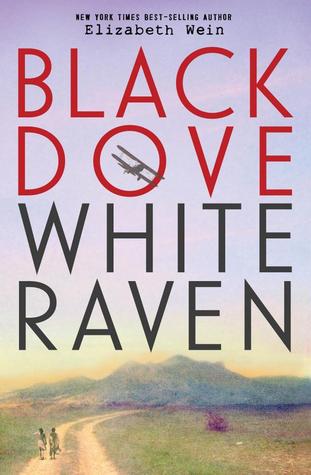
Black Dove, White Raven
Black Dove, White Raven- Elizabeth Wein

95% of my reading is for pleasure and 5% is for obligation. I also enjoy learning while I am reading so that is why I am drawn to historical fiction, biography and history books. Sometimes there will be a book that is available for me to read or listen to and I'm not too excited but I think that it might make me a broader reader or more intelligent so I plod on. In cases like this however, if I am not enjoying it after giving it a reasonable chance I put that book right down and say adieu to the characters. In a way I love giving up on books. I'm reading for pleasure, not uni or to be payed so I'm not going to suffer through a book I dislike.

The last book I didn't finish was "Black Dove, White Raven" by Elizabeth Wein. This was a surprise. I have read two other books by the author and really enjoyed them both and now I'm reading her third book and can't get past the first 50 pages! I was listening to this at school and I had an hour after school just to twiddle my thumbs before a concert. The perfect time to listen to a book and do some theory or Hanon practice but I just couldn't bring myself to continue with the book because aspects of it were too frustrating to me.

One of these frustrations was the intelligence age of one of the- at that time 8 year old- main characters Teo. My life revolves around 8 year old boys, I think I have a pretty good grasp on their maturity level and their use of language. 8 year old boys do not use fancy language or metaphors! In this book Teo kept on coming up with these pearls of wisdom and sentences all connected by these great metaphors. 

The boys I know at the age of 8 are clever, hilarious people but they like to talk about the games they play, how the chair they are sitting on makes a funny noise and that they can run faster than anyone else. One of my grade 3 cello classes delight in singing LOUDLY "Pin, Pong, Peddle!" to the tune of Hot Cross Buns. Who knows why? this to the them is the height of wit and and they could sing it for hours. 

In this novel Teo soliloquies for a paragraph on how his step mother's depression was like the handle of a pitcher which had been broken off and even if it were to be repaired it would still have the marks of the break on it. Maybe I mix with the wrong 8 year olds but I can't imagine any of them coming up with that without some serious nudging, 

Another frustration was that the story was structured around an unrealistic idea. The novel begins when Teo and Emilia are in their late teens and living in war torn Ethiopia around the beginning of World War Two. The first chapter lets the reader know that Teo for some reason is in custody and Emilia is doing her best to get him released. Emilia decides to petition right to the head of state in Ethiopia by writing him a letter or you could say, a book. In fact the very book we are reading. She feels that giving the Ethiopian head of state an intimate look into Teo's life from age 5 where she recounts anecdotes and descriptions of minor characters he will come to realise Teo's innocence and need for freedom. Adding to craziness of this, Emilia mentions in her opening that she is writing in a language that the head of state cannot read so he will need to have his translators translate it for him which Emilia acknowledges may be tricky since they are in the middle of a war. 

This 'hail mary' plea bargain just seemed too far fetched to me. I found it difficult to lose myself in the book as I kept on reminding myself that the official translators are supposedly translating this description of Teo ad Emilia's school life because some how it is of as much importance as the gun fire outside. 

I was disappointed that I didn't enjoy this book, I really wanted to but overall I felt like this book was trying hard to be beautiful and deep but trying so hard it was noticeable and unnatural. If you want to read a book by Elizabeth Wein I recommend "Rose Under Fire" and "Code Name Verity" but give this one a miss. 

Tuesday, March 29, 2016

A Month of Haiku

Hunting Shadows
- Charles Todd

Cathedral Sniper -
Which victim was the target?
Old hatred simmers.

The Wide Window
- Lemony Snicket

Orphans and Aunt Jo
Her note warns about Capt' Sham 
Flesh leeches are near.

Book of a Thousand Days
- Shannon Hale

Two girls locked away,
One - loyal, One - scarred and scared,
Both must conquer fear.

Nurse Matilda
- Christianna Branch

"You don't want me here,
But I will stay and help you
Till you see what's right".

Anne's House of Dreams
- L. M. Montgomery

Tears and joy mingle,
The unexpected happens,
It's all quite flow'ry.

The Lone Star Ranger
- Zane Grey

Action, Adventure
Ego at the start and end,
Pew, Pew, Pew, Pew, Pew!

Right Ho, Jeeves
- P. G. Wodehouse

Bertie wants to help,
But dealing with newts and sharks,
Jeeves' brains are required.

Henrietta, Who?
- Catherine Aird

A murder by car, 
A girl's lost identity,
A jumble of lies. 

Through the Fire
- Hester Burton

Fire in Pudding Lane,
No escape for the Quakers -
Innocents locked up.


"Even when I'm alone I have real good company - dreams and imaginations and pretendings. I like to be alone now and then, just to think over things and taste them. But I love friendships - and nice, jolly little times with people." Anne's House of Dreams

Monday, March 28, 2016

A man, a woman and a cat

Futher Chronicles of Avonlea
- L. M. Montgomery

A number of years ago I decided to try and collect the full set of L. M Montgomery books. I already had two or three in a particular edition and I liked how they smell old and have water colour covers. Since then I have regularly trawled second hand books stores, online stores and ebay and my collection now stands at 19 books. Most of the covers look fantastic but there are a couple that have clearly been done by a different artist and the cover art for these books can be questionable.

One of these more unusal covers is for the short story collection Further Chronicles of Avonlea. For your enjoyment I have placed here a picture of the cover.

This cover is so confusing! 
11492593What is happening and what is going on with that cat? The woman is sitting down you would assume, but the angles make no sense. What is that brown thing in her lap, a blanket, a leg or the side of the chair? If it the side of the chair what is her other arm propped on? Is the cat also sitting on her lap or is is sitting on some material that coincidentally matches the colour of her dress? The cat is three times the size of her head, why is the cat so large? How is that coffee table standing? The legs seem as if they wouldn't be able to hold the weight of the plant. And then the man, why is he sitting behind her? If he has come to talk to her why would he sit facing her back? Why is he so cheerful? Maybe she doesn't know he is there? Why is she ignoring him if she does know he is there? I'm pretty sure the man and the cat have a shared joke.

This is one of the most bizarre covers I have ever seen but thankfully they aren't all as strange as this one. I have read the short story that centers around this cover art but I can't remember it at all, I think I need a refresher. Maybe it is about a man and cat who trick a sad woman to sit in a narrow uncomfortable chair so they can laugh at her. 

Here is one of my favourites covers from this collection - 

11492672

And here is my collections so far. I only need three more to make it complete. 


Friday, March 4, 2016

Questions on Classic Books

1. What is a classic book that you didn't like?
Wide Sargasso Sea by Jean Rhys.  This is a prequel to Jan Eyre and I didn't like this book because of how much they changed the character of Rochester. He is never the classic hero in Jane Eyre but he is definitely the bad boy in the novel Wide Sargasso Sea which turns him into a cruel, shiftless and self absorbed man. The greatest issue Rhys seems to have with Rochester is his actions towards Bertha and I understand how this section of Jane Eyre is foreign to modern readers. In today's society when someone in your family has a mental illness it is frowned upon to lock them in an attic. But mental health was viewed very differently in the 19th century and I don't think there are clear examples of Rochester's neglect of Bertha. Bertha is actively trying to kill Rochester and he still provides medical help for her as well as a full time career. I have no problem with authors having a go at writing sequels or prequels to classic books but this vast removal from Charlotte Bronte's vision frustrates me. It is like someone coming along and drawing skeleton men all over the sails of the Sydney Opera House and saying it is all right because they view the opera house as a place of death and skeletons. Maybe they do view it that way, fair enough, but it is not their property to doodle on. 

2. What is your favourite time period to read about?
Medieval, Viking, Roman, 16-19th Century Europe, Regency, Elizabethan, American Civil war... I could go on. This question should be worded what time period do you not read about. 

3. What is the classic book that you are most embarrassed you haven't read yet?
To Kill A Mocking Bird by Harper Lee. I keep putting this off because I am worried the the ending of court case will frustrate me too much. I know most of the story already, do I actually have to read it?

4. What are five classics you would like to read?
Dracuala by Bram Stoker, On the Beach by Nevil Shute, Oliver Twist by Charles Dickens, The Mysteries of Udolpho by Ann Radcliff, Gone with the Wind by Margaret Mitchell

5. What is your favourite movie or tv series based on a classic book?
Cranford based on the novels set in the village of Cranford by Elizabeth Gaskell. I like how the tv series and novels show excitement in the little things that occur in village life. 

6. What is the worst classic to movie adaption?
Pride and Prejudice 2005. Similar to Wide Sargasso Sea, I feel this adaption goes too far away from the novel. Lizzie's station in life is changed, the whole village is much more rustic and unrefined, and the characters are crass. At best this was the idea of Pride and Prejudice but certainly not a close copy of the original. There would have been no pig just wandering around indoors at the Bennet household!!

7. What is an under hyped classic you would recommend to anyone?
Kidnapped by Robert Louis Stevenson. This book is not completely unheard of but it is certainly over shadowed by Treasure Island. The protagonist David Balfour is an unreliable narrator and his indecision and mistakes create a lot of confusion and adventure. Alan Stewart who travels with David is also a very complex character and I found I kept switching my opinion on whether he was a scoundrel or not. This book set in 18th century Scotland sees David and Alan being pursued over sea and through the Scottish highlands. This is a good old fashioned adventure book, that could be read by anyone!


Saturday, February 27, 2016

Bertie steps up to the plate

Thank you, Jeeves,
- P. G. Wodehouse 

In this Jeeves and Wooster novel chaos, miscommunication, and conflagrations once again harass the hapless characters. The book begins with Bertie's realisation that his calling in life is to be one of the world's great banjolele players. This calling is very clear to him but not to any of his neighbours, friends or Jeeves and soon Bertie is faced with a decision. Either he must cease his aspirations with the banjolele or Jeeves will leave his service. The decision is made and the banjolele comes out on top. Bertie moves to the village of Chuffnell Regis with his new man, the morose Brinkly but Bertie and Jeeves will not be separated for long. The cottage where he will be staying is owned by Bertie's old school friend Chuffy and Chuffy's new valet is Jeeves. Joining the throng at Chuffnell Regis is; Seabury - Chuffy's nephew who is demanding protection money, Sir Rodderick Glossup - the famous nerve doctor who believes that Bertie should be certified, J. Washburn Stoker - the american millionaire who hates Bertie and his daughter Pauline Stoker, who was once engaged to Bertie.

Bertie must ward off a murderous valet, escape kidnap and try to save Chuffy's love life all while being harassed by the ever watchful Police Sergeant Voules who lives next door. 

I love Jeeves and Wooster books because they are cleverly written and they can always brighten my mood. I also love them because of Bertie's character. He is not a clever man, in fact Jeeves himself states that Bertie can be "mentally somewhat negligent" but his other qualities make up for this in spades. In world politics today it seems like those looking for power see strength in rudeness, bullying and intimidation. I will always prefer the Berties of the world who find that the qualities of cheerfulness and resilience are just as compelling.

My rating; 5 Stars

"He sighed slightly. All this talk of my going to shows was distressing him. What he really wanted was to see was me sprinting down Park Lane with the mob after me with dripping knives... The man annoyed me. I hadn't the slightest objection to his spending his time planning massacres for the bourgeoisie, but I was dashed if I could see why he couldn't do it with a bright and cheerful smile." 

Monday, February 22, 2016

When the going gets tough...

The Fated Sky
- Henrietta Branford

I think we can all agree that life can be tough. I know there have been many instances in my life where I have felt like dramatically falling to my knees, clenching my fists and howling "Nooooooo!" However, overall I live a comfortable, happy life and one of the most difficult moments in my day can be when I realise the peanut butter has been left in the fridge making it solid and unspreadable for my toast. The agony of it all!

It is helpful to get some reality on how good I have it and this book The Fated Sky served well as a cuff on the ear. 

Ran is a teenage girl living with her mother and grandmother on an outlying Viking homestead. Her brothers and father were Viking warriors/slavers/traders who died far from home. Recently an old flame of Ran's mother has turned up and he and her mother start to make life difficult for Ran. This old flame has a crazy viking name starting with a V, I haven't seen it in print since I listened to the audio book and I have no idea how you would spell the name so we shall call him Vile V. Every year those living on the outlying homesteads gather for a time of feasting at the central grand house and Ran, her mother and Vile V set off on the difficult three day journey. The wilds of Norway are still very wild and there is the risk of being attacked by wolves or dying from exposure and cold. A day out from the grand house they are attacked by a pack of wolves and Ran's mother is critically wounded. Vile V wild with grief lashes Ran with his fury as they rush the last couple of miles. Ran hopes for sanctuary and peace at the grand house but she swiftly comes to the realisation that there can be danger anywhere and she has no cards to play. 

1101305Ran is living in a time where young women are possessions not people and whoever owns you has the right to do with you as they will. In the book, one woman casually tells another to avoid travelling with a certain man because he will attack and sell her. Everyone knows this but no one will make any effort to condemn or stop him, it's just the way things are. This is a time when superstition, and religious fear rule and people are chosen at random to be brutally sacrificed to appease the anger of the gods.  It's best to make the most of what you have when you have it because quite likely it will be stolen, destroyed, attacked, burnt, killed or die. The moments of mercilessness in this book really shocked me and it was hard to listen to how some characters reacted to their onerous lives with vicious and evil behaviour. Ran's experience was not sugar coated it showed her tough life and I think this contributed towards a number of negative reviews this book has recieved. This book was raw and harsh but it managed to not revel in the ugliness of the situations. 

The thing that stopped this book from being four hours of wallowing despair were the tiny rainbows of hope throughout the story. Ran found beauty in the the rugged landscape of Norway and Iceland and I liked her descriptions of what she saw. Also, even in the midst of the conflict in this novel, some of the characters showed that it is possible to make your own happiness. 

My rating: 3.5 stars

Saturday, February 13, 2016

Eccentric is cool

Death in the Stocks
- Georgette Heyer

I really enjoyed about 90% of this book, it was clever, funny and the murder happened in the first chapter. All good signs of a murder mystery novel in my opinion! 

The book begins with the body of Arnold Vereker being discovered in historical stocks set in the middle of a village green. The suspects seem obvious as Arnold's half brother and sister both come out of the situation extremely financially well off. Also not helping their case, Kenneth and Antonia Vereker seem completely unperturbed by their half brother's murder. They are openly happy that Arnold is dead and they thoroughly enjoy taunting the police as they revel in eccentricity. I found many similarities between Kenneth and Antonia and Jean Ralphio and Mona Lisa Saperstein. Since I love Jean Ralphio and Mona Lisa I loved the Vereker siblings. Their honesty was refreshing and their loyalty to each other was endearing. The other cast of characters include the Vereker's laid back lawyer, Kenneth's gold digger fiance and the Vereker's grumpy housekeeper/maid/guard dog. 

The mystery itself was not all that difficult to wok out as there was some not so subtle hinting in my opinion but the characters in the book were fantastic which made the novel enjoyable overall. My only frustration was I felt that in the last couple of chapters some of the characters had their personalities watered down.

My rating - 4 stars.

"People who start a sentence with personally (and they're always women) ought to be thrown to the lions. It's a repulsive habit." 

Saturday, January 23, 2016

Feminism in 900 AD

Hidden
- Donna Jo Napoli

This book begins just after Brigid escaped from a slave ship off the coast off Denmark in 900 AD. Brigid as an Irish princess had known a privileged life but her new situation - alone and in a distant country - places her suddenly at the bottom of the pecking order. As a foreigner, a female and with no family she has very few rights and very few people to rely on. She is constantly vulnerable to being used and possessed but Brigid is a fighter and she refuses to be controlled just because she is a female. She goes from being a virtual slave to an adopted daughter of a queen to a pirate captain. Through the years her single aim is to find and rescue her sister who had been kidnapped at the same time. 

One of the reason I love historical fiction so much is because I feel transported into another time period and I can have a view into that time's different lifestyle and traditions. "Hidden" didn't conceal the harshness of the time period and I really felt like I experienced the effort it would have taken just to live and function during this period of history. Some historical fiction is almost written like contemporary literature just with everyone living in castles and wearing long dresses or tunics. However in this novel the differences between my life and Brigid's life were stark and shocking.

This novel started slowly but the last half was so suspenseful and engaging it made up for this and I stayed up late finishing it. I would not recommend this to someone who is more interested in frou-frou/ romance historical fiction but if  you like Rosemary Sutcliff novels I think you will enjoy this book.

My rating-
4.5 stars


"You are a pirate? Alfhild, my Alfhid?"
"I am Brigid."
"Brigid?"
"I was hidden before. But I'm Brigid inside."


Friday, May 2, 2014

I confess.

Spindle's End
- Robin McKinley

I confess! It was I, I did it. I planned it, acted on it and enjoyed it. I'm glad, glad, glad I did it and if I had my time again I would still do it.
I listen to Audio Books.

When I was very small I relied on my sisters to read books to me but once I could read alone I did it with gusto. In my prime I would read six to seven books a week. Along came uni and the number dropped to one or two and then the final destroyer of free time- work- arrived and the number of books I read dropped again. I come home from work tired and busy and visits to the library are far and few between but how can I desert books? Thus began my discovery of audio books.

I spend at least an hour in travel time every day and then have menial tasks at home and I can listen to books during this time using the brilliant skill of multitasking. I still read books with my eyes looking at printed words but many of the recent books I have come across have been audio books. I am sure there are many highbrow people out there who would feel that I can no longer claim to read these books. They might say because I only listen to them I only experience them in a lesser way. It means I don't have to struggle with reading hard to pronounce names or face the peril of crushing in my face when reading a heavy book lying down. However, I say to my critics, I still learn the entire story and come to grasp with concepts and characters. I will take a stand and wave my placard high!  Listening to books is far better than not going near a book and is a valid and worthwhile use of time. To me all fellow time-poor book enthusiasts!

I have come around in a full circle and once again I have people reading to me.


Spindle's End

Guess what fairy tale this is a retelling of? Sleeping Beauty. Robin McKinley added a lot to this simple story. When she was finished with it, it was no longer a pretty little tale but a lengthy, background information stuffed, complex novel.

The story begins at the birth of Sleeping Beauty. Her parents neglect to ask the evil fairy to the name day event but this fairy of evilness is not put off by the lack of an invitation. The wicked fairy Pernicia arrives bent on a hideous revenge. Pernicia cackles appropriately and curses the Princess to a deathly sleep brought on by the prick of spindle's end on the day of her 21st birthday. All living creatures, humans, animals, and living houses (yes, living houses) are horrified. The Princess must be saved!

To protect the life of the princess a plan is concocted and she is spirited away by a young, ordinary, country fairy called Katriona. On this difficult journey Katriona is helped by many different animals and this is the beginning of a deep life-long friendship the princess has with all animals. The location of the princess is kept a secret even from her parents and her elaborate name 'Casta Albinia Allegra Dove Minerva Fidelia Aletta Blythe Domina Delicia Aurelia Grace Isabel Griselda Gwyneth Pearl Ruby Coral Lily Iris Briar-Rose' is changed to Rosie (what one name would you pick from this list?). The plan is that the longer Rosie is hidden the less chance there will be that Pernicia can harm her. However the closer it gets to her 21st birthday the harder it will be to hide her from Pernicia's spell. Time passes and Rosie grows up about as un-princess like as possible. She is far too tall, she wears her hair short and she works as a  horse leach, caring for animals in the muck and mess of a blacksmith's shop.

Rosie does not know her true identity and she never dreams she could have a secret life outside of the small village where she lives. Her aspirations are that the introverted and grumpy blacksmith will finally notice her as a woman and they will live happily ever after. Rosie see herself as a clumsy, useful type of girl not at all interested in dresses or ceremony. All of this is thrown into confusion for Rosie when a stranger turns up on the doorstep only a few months before her 21st birthday. The stranger is a high ranking fairy and he has just discovered where Rosie lives (a male fairy, what?). He knows that if he has discovered the location of Rosie then Pernicia could easily do the same.

Pernicia filled with rage and revenge bares down on Rosie and Rosie is forced to take on her roll of princess-protector for the first time in her life. She has the help of her human and animal friends as well as a jolly old living castle but Rosie is unsure that she even wants the life that success over Pernicia will bring her. 

It is clear to see that Robin McKinley is very imaginative, She breaks up the original story of sleeping beauty and then stitches it up differently giving much scope for new perspectives and building extra characters. However there is such a vast amount of exposition and history that this book drags out to be a lengthy story. Mckinley at times seems to get so lost in threshing out side details that it comes as a shock when the actual story begins again and there is some action. Spindle's End entertained me enough as I drove and did cooking but I will not be shouting it's praise from the rooftops. 

"People forgot; it was in the nature of people to forget, to blur boundaries, to retell stories to come out the way they wanted them to come out, to remember things as how they ought to be instead of how they were." - Robin McKinley

Tuesday, April 8, 2014

When Jays fly to Barbmo

When Jays Fly to Barbmo
- Margaret Balderson

Book Three - Twelve books about WW2

The time is 1940, the location is a remote island in northern Norway and the protagonist is Ingeborg a teenage girl who has to make some big decisions. 

In early 1940, Norway was not yet involved in World War 2 and many Norwegians hoped that they would continue to remain uninvolved. Switzerland had claimed neutrality, Norway would claim it as well. While so many other countries had been secretly or not secretly building and fortifying their armed forces Norway was running late and had remained relatively unprepared. In fact when Germany swiftly and silently invaded Norway on the 9th of April (exactly 74 years to the day that I am writing this!), Norway did not even have a standing army. What Norway did have though was cities with harbors that didn't freeze in winter and when both the Allied and German forces wanted control over iron ore resources and and transport in the Baltic sea, Norway became an important playing piece in the war. 

Now to the story!

Ingeborg lives with her father Arne, her father's sister Anne-Sigri and an old friend of her father's called the Wood Troll. Just before this book begins, Ingeborg ran away from the small city boarding school because she missed her home and her father. However, now she is where she wanted to be, Ingeborg feels closed in and she is knows that the family has secrets. No one will talk to her about her mother who died in childbirth, her aunt adores her father but he can barely stand the sight of her, and Ingeborg wishes the Wood Troll would be more open and stop talking in riddles. 

In northern Norway where Ingeborg lives there are months on end of darkness during the winter. Ingeborg loves the arctic air, the brooding mountains and the deep blanket of snow but she also feels the 'dark sickness' when the endless night causes her to feel restless and scatty. 

Not long after the invasion Ingeborg's father is killed by Germans as he tries to help some Norwegian soldiers escape in his boat. The small family is distraught and Ingeborg demands the Wood Troll tell her about her mother. He finally complies. Her mother, Susanna, was a Lappish girl, the native wanderers of Norway. Susanna had married happily, but her natural wanderlust had made her feel trapped at the farm and her relaxed ways had created tension between her and Anne-Sigri. Days before she was to give birth to Ingeborg, Susanna was suffering from dark sickness and she made for the hills desperately wanting to be free. Arne was away on a fishing trip and by the time Susanna was found she was dead but Ingeborg, miraculously, was alive. Arne in despair blamed Anne-Sigri for Susanna's death.

Finally understanding her true identity, Ingeborg feels strongly that she wants to follow her mother's last journey. If she leaves she will have the free, exciting life she has always dreamt about. However, leaving will also mean turning her back on the dangers facing her community, on the Wood Troll who Ingeborg discovers is Jewish and her friend Viekko who is attempting to hide from the Germans so he won't be forced into service. 

While much of this book is focused on Ingeborg discovering her Lappish heritage and working out what she really wants for herself there is another theme. This other theme show the various reactions made by groups and individuals about the war. The Norwegians try to avoid it, the Lapps ignore it and Ingeborg's father faces it. The word "Barbmo" in the title refers to that place over the horizon that birds fly to at the start of winter. The Jay bird customarily stays throughout winter. In this novel, Ingeborg must decide if she will fly to safe Barbmo or stay and face out the winter.

"I am so heartily sick of not knowing who or what I am, I said."

This book would be in my top 20. 
Behold the "Charise Seal of Approval"!


Saturday, March 15, 2014

A Child of Hitler

A Child of Hitler - Germany in the days when God wore a Swastika
- Alfons Heck

Book Two - Twelve book about WW2

This is a fascinating book and I think it needs to be a widely read book. If it is it not on high school and uni reading lists it should be.

Alfons Heck, the author of this book, was a teenager and member of the Hitler Youth in Germany during World War 2. War changes people and forces to them grow up fast and this is accurate for Alfons. Today, modern teenagers may spend their free time in packs of like minded school friends loitering in shopping centers or being car pooled to sporting events. In 1945, sixteen year old Heck had risen rapidly in the Hitler Youth to the rank of Gefolgschaftsfuhrer - an equal rank to an U.S Army or British Army Captain- and was in in command of nearly 2,800 boys and 80 girls in defensive duty on the Siegfried Line. This was unusual, not however for the reason that springs to mind. It was unusual because sixteen year old Gefolgschaftsfuhrers - which were not uncommon- usually were in command of only a measly unit of  800 boys. This mind boggling rank and command system was present because of two main reasons. Firstly, due to the horrendous loss of life suffered  by the German army. The army was running out of men and determined not to surrender they dipped into the youth of Germany recruiting boys as young as twelve years old. The second reason is that the members of the Hitler Youth had been schooled and indoctrinated in the ideologies of Nazism from the age of five and six. This resulted in the Hitler Youth being one of the most fanatic groups in Nazi Germany and they were desperate to fight in the war, even as defeat grew near. Many choose suicide over the thought of living in a world were their leader and hero, Hitler was not in command.

Whether or not these child soldiers should be held accountable for their actions is one of the key themes of this book. Currently the age of criminal responsibility ranges in age between 10 to 12  in different western countries. The idea is that a child under 10 does not have the mature capability to commit a serious crime and they cannot be charged with one. The members of the Hitler Youth were older than 10 but was the weight of their tainted education and the national intoxication of Hitler too much for them realise the true consequences of their actions? Did they even know the whole picture? Heck writes about his horror and shock when at the end of the war he was finally convinced that concentration camps had actually existed. In this book Heck writes that he and the boys relished their power and supremacy and they had believed in the master race. However, as he learnt the truth of what had happened during the war he felt deep anger and resentment to his elders who he felt deceived and delivered their children into a lie.

If you want to read a book that will make you feel as if you were with the Hitler Youth on their rallies, during training and when they faced active war, this is the book for you. Heck paints a very vivid picture of his experiences and since they are his own experiences the truth of what really happened to thousands of German children and teenagers thuds home.

"Tragically, now, we are the other part of the Holocaust, the generation burdened with the enormity of Auschwitz. That is our life sentence, for we became the enthusiastic victims of our Fuhrer."

Alfons Heck became an American citizen and toured the for nine years with Helen Waterford, a Jewish survivor of Auschwitz. Together they gave talks to thousands of  people on their different perspectives and experiences of the Nazi era.

Sunday, March 2, 2014

The Seventy-Four Rabbits

Rose under fire
– Elizabeth Wein

World War 2 was absolutely a ‘world’ war because of how it affected such a vast number of countries and people. I find that growing up in the British Commonwealth; I have understandably known much more about the British viewpoint and how it affected the British and Australian forces. World War Two caused many different reactions and consequences in other countries though and so to broaden my perspective, for the next twelve weeks I am going to read twelve books that focus on some different parts and attitudes of the war. I am going to be focusing on the war in Europe rather than in Africa, the east or at sea because it would already take me a life time to read through everything that has been written about the European side of the war!
               
Book One - Twelve books about WW2

Rose Justice is an 18 year old American who has lived through most of World War Two in perfect comfort and peace. In 1944 she decides to use her experience as a pilot to go to England and join the Air Transport Auxiliary which consists of female civilians who transport aeroplanes from factories and between aerodromes. While the work has many risks; flying in bad weather, landing on cracked runways and flying broken down aeroplanes to be fixed, Rose feels that her skills are wasted. Her father taught her to fly when she was 12 years old and Rose already has more flying experience then most of the male combat pilots. Rose eventually convinces her uncle who is high ranking in the air force to allow her to transport him to his station in newly allied occupied France. Everything is going well till on her flight back to England when Rose stumbles on a flying bomb - Vergeltungswaffe 1. These were fairly new bombs that travelled long distances before exploding, like our modern day missile. Rose has heard rumours that these bombs can be rammed or even diffused by just disturbing the air space around them. Without stopping to think she turns her aeroplane and makes attempt after attempt to stop the bomb without blowing herself up. She is finally successful but her happiness turns to fear as she realises that she has gone far off her route and is now lost over countryside that is quite likely still in German control.
In no time at all Rose is discovered by German aircraft and is transported deep into Germany. The Germans are very surprised that she is a female pilot and they are unsure what to do with her as she is an American civilian and not a combat pilot. Finally, more because they are unsure what to do with her, Rose is transported to the concentration camp Ravensbrck.

Concentration Camps were some of the worst places on earth, where people were systematically dehumanised and then starved and worked to death. Jews were the people who made up most of the inhabitants in concentration camps but they were not alone. Sometimes forgotten are the Poles, Russians, Czechs, Serbs, Ukrainians, Greeks, French, soldiers and civilians, religious minorities, social outcasts and members of resistance movements, to name just a few were also placed in these camps. Ravensbrck was a female camp with mainly French, Polish, Russian prisoners.  Rose was aware of concentration camps before she arrived at Ravensbruk but she had also viewed them sceptically and the horrible stories that emerged from them were very often considered simply anti- German propaganda. Rose didn’t believe it. That is until she arrived and met the Rabbits of Ravensbrck. These rabbits were seventy four Polish girls and women who were taken to Ravensbrck to be used as experiments. Their legs were cut open and deliberately damaged and then inside their wounds would be placed gangrene or bacteria and then everything would be bandaged in dirty linen. Their torturous wounds were made to replicate those being received by the German troops so that the doctors could experiment and observe the effects.

What is powerful about this book is that it that the story does not stop when the survivors escape or are released from Ravensbrck. It shows the near impossibility it was for the survivors to pick up the pieces of their lives and carry on. Inside the camp the women had banded together and fought to help each other survive so that there would be a time when someone could tell the world what had happened. However once released, fear, guilt of being alive and emotional scarring made speaking out difficult for many of them.
This novel covers very dark and serious topics and while Rose is a fictional character, the seventy four Rabbits were real women. The story, however is not completely black, instead it shows what happened when the women of Ravensbrck refused to give up being human beings and worked together, regardless of their different nationalities, to survive.

Because of the sacrifices of the women of Ravensbrck, sixty three rabbits survived the war to tell their stories.

“Izabela, Aniela, Alicia, Eugenia,
Stefania, Rozalia, Pelagia, Irena,
Alfreda, Apolonia, Janina, Leonarda,
Czeslava, Stanislava, Vladyslava, Barbara,
Veronika, Vaclava, Bogumila, Anna,
Genovefa, Helena, Jadviga, Joanna,
Kazimiera, Ursula, Vojcziechz, Maria,
Wanda, Leokadia, Krystyna, Zofia”

 (A mnemonic counting-out rhyme that includes all the given names of the seventy four Polish women experimented on in Ravensbrck. Some of the women had similar first names or shared a name, in the poem each name is only listed once.)


Monday, January 6, 2014

Your darkest fear?

Modern Phobias - a litany of contemporary fears
- Tim Lihoreau

What are you afraid of?

 You might have two answers. One that you would toss out for public examination if there was an ice breaker game and then one that is so terrifying or embarrassing you would never readily admit it. Hermione Grainger and I do not share the same fears. I haven’t read all the Harry Potter books. I know that makes me a leper and an outcast of my generation, but I think in the first book, there is a scene where some of the character’s deepest and darkest fears are revealed in front of their entire class. Hermione’s fear is not getting the highest grades on her assessment and that makes my straight B grade self chuckle. Being a straight B student is nothing to be ashamed of and I’m not. While doing well academically is something to aspire to and uphold, I know that academic grades a man does not make. Because I’ve never been in the struggle for top of the class at school instead I was working hard in the pool below to slot in those B’s, this fear is not one that I strongly relate to.

What I am afraid of are cockroaches and scary amusement park rides. If you go upside down, you feel as if you could fall out or you plunge towards the ground it is not natural and it is very, very wrong. I have however been on three of these rides in my life time so I think it is something I can overcome in the hour of greatest need. Cockroaches on the other hand are my kryptonite. You can waltz spiders, geckos, lizards and snakes past me and I won’t blink an eye. However, put me in a ten meter radius of a cockroach, dead or alive, and my strong, capable persona crumbles into a high pitched shrieking, shaking and terrified female. One of my students slipped me a plastic cockroach in a book and my scream would have been heard in New South Wales. She was not remorseful and in fact she was laughing so hard she literally fell off her chair, a fine example of teacher abuse.

Now onto the book. "Modern Phobias - a litany of contemporary fears" by Tim Lihoreau gives a name to some of the modern person's daily fears. Here are some of my favorites: 
  • Aedificatorphobia - fear of builders
  • Ceterinfanophobia - fear of other people's children
  • Fabaphobia - fear of ordering in coffee shops
  • Fortavocophobia - fear of speaking loudly while wearing headphones
  • Idemophobia - fear of turning up in the same outfit as someone else
  • Imitorphobia - fear of talking to someone in their accent
  • Maginvalophobia - fear of being visited by an MP in hospital
  • Perdetophobia - fear of having not saved one's work
  • Stolidophobia - fear of starting a crossword in public
  • Vilimusophobia - fear of lift music
  • Abcellophobia - fear of leaving a toilet cubicle
  • Oviphobia - fear of jumping on the bandwagon

                             
 If you feel embarrassed that you suffer from any of these phobias do you feel any better that they have an official name? Go now and claim as much sympathy as you can. 

These phobias make me laugh! But now on a deep and serious note, because you all know I am a deep and serious person. Should I laugh at people with these phobias? I know I don’t appreciate it when someone laughs at me when I am shaking over a cockroach situation. Are these phobias though, so far-fetched and ridiculous that laughing at them is what they deserve?
This post is finishing with more questions than answers. My English teachers would be proud.

Monday, September 30, 2013

Really? Come on.

Sparkling Cyanide
- Agatha Christie

Be warned, I will be talking about the end of the book.

I like to think that I am an observant person. In fact, I am really just waiting in anonymity until I am plucked from my life of obscurity by MI5 or any special spy force to become their chief of Observations. I would be useless as a normal spy though, because I am not ruthless enough. I can't even invade a country when playing Civilization on the computer because the little computer generated screaming voices rack me with guilt. So I am definitely not cut out to be a "By any means!" person, but sit me down in a crowed area and I could notice and remember a lot of interesting things that are happening and also many very mundane things.

It frustrates me on TV shows when the police are questioning witnesses of a crime and the witnesses are so vague with their answers.
 "Oh yeah," they say, "he was man all right, or actually, perhaps, a tall girl. Yeah, he or she robbed the bank right in front of me, but all I can tell you is that they may have had a hoodie on, maybe. Can't remember anything else about them though."

Come on. Really? 

In the book Sparkling Cyanide by Agatha Christie the murder is finally solved after it is proved that the majority of characters are clod-polls and useless when it comes to anything to do with observation. 
I love Agatha Christie's novels, I think I have read all of them and many of them many times over. I think what keeps on drawing me back to Sparkling Cyanide is the fact that I think I could have solved the mystery on the spot, surely it would have been obvious?

In the novel the real confusion arises when the murderers rely on the characters ability to be observant. Silly murderers. My advice to them, never rely on people to act logical when you want them to most. 

The scenario in brief: There are seven party goers sitting having tea at a circular table in a restaurant. The murderers plan to knock off Iris who is seated next to innocent George. While all the party goers are dancing, one of the murderers slip cyanide into Iris's glass, so far, so good. The jolly dancers return to the table and innocent George quaffs down his drink. He then clutches at his throat and falls down dead. George has in fact died from the cyanide that was placed in Iris's glass. Everyone, including the murderers are shocked. This occurs because a flighty waiter accidentally places Iris's bag one seat further along then where she was originally seated. Iris just makes a bee line for her bag when she returns from dancing thus causing the entire table to move one seat further round then before and George sits down to cyanide surprise while Iris has the "brew that is true".

My problem with this scenario is this; surely, I mean surely, even if your bag was positioned at a different seat you would be still aware that you are facing in a different direction. You would be able to see tables that you hadn't before, people from different angles your whole point of view would have been affected. I can say I certainly would have realised I was in a different place. Is it just me? or are you all nodding your heads and saying "Here, here!"

I love Agatha Christie and I enjoy this book. However, I can't believe that in a group of seven people, no one would notice they had moved places.


Wednesday, July 17, 2013

Mistress Pat

Mistress Pat is the second novel of a series of two written by L.M.M Montgomery. Pat loves her house at Silver Bush obsessively but what she loves even more is the point in life that she is at. She loves her friends, she loves her loving family, she loves her cats and the secure bubble she lives in. Pat desperately does not want anything to change, but that of course is impossible. Friends die, people marry and move away and Pat scrabbles feverishly for constancy, pushing away her on-and-off fiance Hilary. Pat spends years holding fast to the Silver Bush house insisting to herself that she loves loneliness. Will Pat ever be strong enough to let go and move on?? It sounds so melodramatic.

I surprise myself daily that I enjoy reading books by L.M.M. Montgomery. The main characters are so frothy, floaty and feminine that I would normally scoff at people who enjoy them but here am I trapped in the spell of them. I even collect her books! I don't know why, but I do very enjoy her books. Maybe because they have a simplistic, other worldly charm. However, much as I laugh at them and they can really be very silly at times- sometimes I know the characters are more than a little insane with the strange things they say- hiding underneath the layers of giddy chatter is unexpected clarity of thought and strength of character.

Here are some classic L.M. moments, you chose, are they deep, inane or quirky?

“My life is a perfect graveyard of buried hopes.”  - Anne of Green Gables

“There might be some hours of loneliness. But there was something wonderful even in loneliness. At least you belonged to yourself when you were lonely.” - Mistress Pat

“One can't get over the habit of being a little girl all at once.” - Anne of Avonlea

“If you can sit in silence with a person for half an hour and yet be entirely comfortable, you and that person can be friends. If you cannot, friends you'll never be and you need not waste time in trying.”  - The Blue Castle

“I love to smell flowers in the dark," she said. "You get hold of their soul then.” - Anne's House of Dreams

“Don't be led away by those howls about realism. Remember-pine woods are just as real as pigsties and a darn sight pleasanter to be in.” Emily of the New Moon

“It is never quite safe to think we have done with life. When we imagine we have finished our story fate has a trick of turning the page and showing us yet another chapter.” Rainbow Valley


Beau Geste- The book I love and HATE

Never has a book infuriated me as much as this book.

Even now just thinking about it I can feel every hair on my head standing up in fury! The character I particularly despise can be glad that they will never come into personal contact with me with because I would have much to say to them and that of a very fruity nature. 

I would generally say that I am an understanding and patient person, but here understanding and patience ends!

The novel beings by describing two very different mysteries. The first is set in the wilds of the northern Africa at a military fort and the second, set in the English countryside; involves a close knit, proper and well to do English family.

Let me describe the mysteries for you.

 Mystery 1.
The Commandant of a division of the French Foreign Legions in the wilds of northern Africa receives a message that the nearby fort, Zinderneuf, is under siege by the marauding people of the land. The fort is desperately under-maned and the Commandant sets off at once with his division to try and rescue the besieged legionnaires before they are all massacred. They arrive but from the outside everything seems to be calm and quiet. There is no presence of marauding bandits and no burning fort. The Commandant breaths a sigh of relief until he notices many strange things. There is no sentry on the lookout. The soldier standing at the battlements refuse to acknowledge him and there is no answering bugle call from inside the fort. On closer inspections it is found out that every soldier on duty at the battlements is in fact dead, propped up in position to appear alive. The silence of the fort and the presence of the it's dead protectors scare the Commandant and his men. The bugler volunteers to investigate inside and he is boosted inside. Finally the Commandant also enters the fort after the bugler fails to report back. He finds that everyone in the fort is dead but it is clear the bandits were not able to force an entry. Every man is propped up on the wall except for one man who lies on the parapet with a bayonet in his chest. The Commandant is spooked and confused.
Where are the bandits?
How do dead men prop themselves against the walls?
How did a fort of dead men hold off an encroaching force?
Why is the Commander of the fort the only one dead from a bayonet wound?
Who killed the Commander? and
Where is the bugler who entered but has now disappeared?

Mystery 2.
Brothers Michael (Beau), Digby and John Geste have spent most of their childhood with their Aunt Patricia. She is a kind, childless lady married to a mean, rich man called Hector. While Aunt Patricia would like to help the poor of the region, miserly Uncle Hector holds his finances close to his chest. It is rumoured Patricia only married Hector for the gem he gave her as a wedding present. It is a huge sapphire worth at least thirty thousand pounds called the 'Blue Water'.

The brother's childhood playmates were; beautiful Claudia niece of Aunt Patrica, Isabel, Claudia's companion, and Augustus, Uncle Hector's stuck up and misunderstood nephew. Beau Geste is Aunt Patricia's favorite child and she loves his gentle commanding and moral nature.

One evening when the children are grown up they are all gathered together excepting Uncle Hector. It is requested that the sapphire be brought out to look at and they are all take turns looking and holding it. Suddenly the lights go out and when the darkness lifts the sapphire has gone. Very quickly the mood of the evening turns sour as no one admits to taking the gem and everyone falls under suspicion. Aunt Patricia is at first shocked, and then disappointed and then angry. She threatens to call the police and demands that no one leaves the house until the soulless, black- hearted thief faces the consequences.

John, the youngest Geste brother and narrator of the book is horrified when he wakes up to find that his oldest brother has flown the house. Beau leaves a note for his brothers stating that while he did not take the gem he has deliberately incriminated himself to shift the blame from the others. It is not long before Digby also secretly leaves and in his note to John he reiterates Beau's words swearing he did not steal the gem but he wants to protect the girls from unpleasantness. John is convinced of his two brother's honour and love for Aunt Patricia. However, he has had a niggling doubt about Beau since he found him with his hand close to where the sapphire was last seen. Pushing these thoughts to the back of his mind however, John soon gets into the action and he too uncreatively flees the house hoping to confuse any facts that may put the guilt onto Beau.
Who took the sapphire?
Why take the sapphire?
How can everyone seem so innocent? and
Are Beau and Digby as honourable as they seem?
.......

These two seemingly removed stories slowly move closer together.

Beau, Digby and John reunite as they enlist in the French Foreign Legion in a bid to evade the law that is catching up on them. They have a rosy idea of rolling sand dunes, feisty camels and rollicking adventures against marauding bandits. Ha! They instead endure long marches, blistering heat, minimal food, bloody battles and cruel men who they are fighting against and are also in the Legion. However these brothers are stout fellows and true Brits and they knuckle down to it waving an honourable fist in the rabble's noses while crying 'dignity, always dignity!' They make some true friends and some lasting enemies, especially when rumours abound that one of them is carrying a huge sapphire and every man and his camel wishes they could get their hands on it.

The conclusion approaches as we find that the brothers have been separated. Digby is now a bugler in one company while Beau and John are legionnaires in the company situated at the soon to be ill fated fort of Zinderneuf. The Commander of Zinderneuf, Lejaune, is an evil man reckless of the lives of his men but a brilliant battle strategist. It is not long before his men plan to mutineer against him but Beau and John refuse to join such dishonourable plans. Lejaune also has plans to murder the two brothers and take the gem they are suspected of carrying. Beau and John find themselves trapped between serving their Commandant honourably, while avoiding being killed by him. As the tension between the three parties builds to a climax suddenly the fort comes under attack and everyone must fight together against an enemy that out-numbers them a hundred to one. The security of the fort gives the legionnaires something to work with against the maruaders but it is not enough and Lejaune hatches the plan to prop up dead man at the battlements to confuse the enemy and make their number seem far greater then they really are. The plan works but the battle is still fierce and there are more and more dead men standing at their posts.

In a terrible moment John turns to find Beau fallen. John is thrown into despair and he feels that he is incapable of living when Beau is dead. A new wave of pain washes over John as the marauders retreat to wait for a more opportune time to attack. If only Beau had survived a few more minutes!
John and Lejaune are the only two surviving soldiers of the fort. John is horrified when shortly after the battle concludes he finds Lejaune searching Beau's body for the gem. Lejaune turns his gun on John and declares he will kill John and take the gem for himself when Beau who is in fact only just alive trips Lejaune so he misses John and John kills Lejaunne with his bayonet. John is horrified at his actions and overwrought because of the dying Beau. Beau asks him to carry a letter back to Aunt Patricia and he manages to call John a 'stout fella' before he dies.

When the rescuing legionnaires arrive at Zinderneuf it is Digby as bugler who enters first. He finds Beau's dead body and reunites with John outside the fort on the opposite side to the regiment. The brothers attempt to comfort each other and head off with two friends from Digby's regiment to civilization alone. There is nothing to stay for now that Beau has died. There is more tragedy however and Digby dies along the way in a couragous attempt to save the life of his brother and his two friends. John, at last, crawls into the city a shadow of his former self.
......

Finally, almost dead and with more sorrows then he can count John returns to see Aunt Patricia with the mysterious letter from Beau. A somewhat somber Aunt Patricia reads it to John. It turns out that Aunt Patricia had in fact sold the real 'Blue Water' long before the incident of the theft. Beau overhead the conversation in which she sold it intending to use the money to help the deserving poor. So to protect her from Hector if he should ever find out, Beau staged the robbery. He even went so far in trying to protect her by carrying the damning evidence with him to sand blasted Africa.

What!? Aunt Patricia knew all along that the stolen Blue water was a fake?
Yes she did. And yet she still threatened, ridiculed, bulled and browbeat her confused and loyal friends, turning them against each other. She refused to share the truth with those who loved her most forcing Beau to make a noble but futile gesture that he paid for with his life and the life of his brother.

Aunt Patricia, you KILLED Beau and Digby, you NINCOMPOOP!!!!! You may not have physically stabbed them or shot them but your proud, self-centered and cowardly actions killed them!! Don't just gently mop your eyes. They will never mop their eyes again because you made a ridiculous decision and then continued on with it and continued on with and continued on with. You had so many chances to fix what you did. Oh, you most frustrating fictional character!!

I am ripping out my hair at the roots in frustration.

I am afraid if I had been John in this book and had come back and heard Beau's letter and seen his Aunt's reaction I would have looked at her, walked out the door and never walked in it again. I hope I might have been able to forgive but I would never be able to go back and act as before. I would never be able to see it from her point of view. Her point of view was DUMB.

Ok. I've almost calmed down now.

The negatives of the book:
  1.  Beau and Digby dying
  2. The general soul destroying bleakness of life lost in the African wilderness
  3. The villains of the French Foreign Legion are really very stereotypical villains without much depth
The Positives of the book:
  1. Very well written
  2. A good deal of subtle and dry humour
  3. Suspenseful
  4. Written about a period in history not generally well known now a days
Should you read this book? Well I have probably ruined it for you now since I have explained the ending. However, if you want to read a heroic adventure book written in an old fashioned style that you will enjoy thoroughly until you have a mental break down in the last chapter due to a sensation of all encompassing rage, I give you my blessing.

Thursday, June 6, 2013

Tintin

In my Viola case I have what you could call a shrine to Tintin except for the fact that I don't actually worship him. It is an A4 collage of all the fantastic moments of 'Tintin and the Red Sea Sharks'. Because of the location of my collage many of my students see it and comment on it and this is where I can see most clearly the separation of the wheat from the chaff.

Positive reactions are always the most appreciated by me and these students and I form a bond of mutual appreciation that can never be broken. Then there are those students who react in a negative way which then brings about a reaction in me and other Tintin fans of hissing, booing and the throwing of rotten fruits. Free speech and respect to these poor students! but my faith in their literary opinion will never be the same.

Why is Tintin awesome you ask? Let me count the ways.

1. He defeats bad guys.
2. He is loyal.
3. He does everything with this great sense of panache.
4. He can drive cars, helicopters, sea planes, tanks and submarines shaped like sharks.
5. He can pretty much wear any countries traditional garb and still look good.
6. He doesn't give up.
7. He is ageless. How old is he really? who really cares? He is Tintin, age does not constrain or dictate to him.
8. He is an optimist.
9. He is funny and adept at dry wit.
10. He fights for the underdog.

I love Tintin!
You love Tintin!
We all love Tintin! and if you don't, quick, turn from your dark ways, and join the cool kids.

Carefree Tintin


Good posture Tintin


Happy Tintin


Informed Tintin

 Intense Tintin


Resilient Tintin

Concerned Tintin


Death defying Tintin


Atmospheric Tintin


Two Tintins!